Key Takeaways
- Create dedicated areas for the ceremony, reception, dining, entertainment, and guest relaxation to make the backyard feel organized.
- Use lighting, flowers, coordinated colors, and personalized décor to create a beautiful atmosphere without overdecorating.
- Prioritize guest comfort with adequate seating, shade, weather protection, accessible pathways, and convenient facilities.
- Incorporate personal touches such as family traditions, meaningful decorations, customized signs, and memory stations.
- Plan practical details ahead of time, including parking, restrooms, electricity, waste disposal, and vendor access.
- Include simple entertainment options such as lawn games, music, dessert stations, and interactive guest activities.
- Prepare a detailed wedding-day timeline and assign responsibilities so the couple can focus on celebrating rather than managing logistics.
A backyard wedding can transform a familiar outdoor space into a meaningful setting for one of life’s most memorable occasions. Instead of booking a traditional venue, couples can celebrate at home while enjoying greater flexibility over the décor, guest experience, food, and schedule. A well-planned backyard celebration can be elegant, relaxed, intimate, or completely personalized to reflect the couple’s style.
From creating a beautiful ceremony area and adding atmospheric lighting to planning comfortable seating and weather protection, small details can make a major difference. With thoughtful preparation and creativity, your backyard can become a welcoming wedding venue that feels personal, polished, and unforgettable.
How Can You Create a Beautiful Backyard Wedding Setting?
A successful home wedding starts with understanding how the outdoor space can work for both the ceremony and reception. The backyard does not have to look like a professional event venue. Instead, focus on using its existing strengths while improving areas that need attention. Think about where guests will enter, where the ceremony will take place, how people will move between spaces, and where food, entertainment, and rest areas should go.
Even modest improvements can make the property feel more intentional and welcoming. These ideas can help you create a setting that looks beautiful without losing the comfort and personality that make a home celebration special.
1. Create a Dedicated Ceremony Area
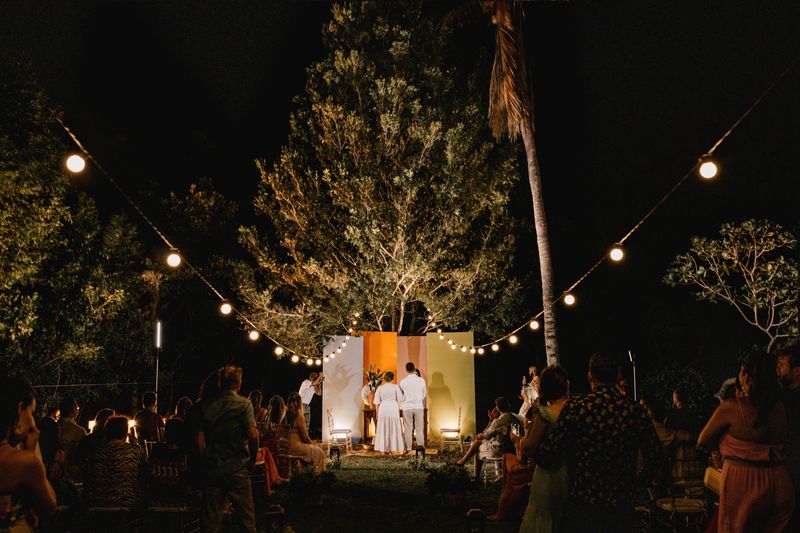
Choose a specific part of the yard for the ceremony rather than allowing the entire property to function as one open space. A simple arch, floral arrangement, fabric backdrop, or row of chairs can establish a clear focal point.
Position the ceremony area where guests can comfortably see the couple. If possible, consider the direction of the sun so that bright afternoon light does not interfere with photographs or make guests uncomfortable.
2. Use String Lights for Evening Ambiance
String lights can instantly change the atmosphere of a backyard after sunset. Hang them above dining areas, along fences, around trees, or across a patio to create a warm and inviting environment.
You can combine overhead lights with lanterns, candles, or pathway lighting. Different layers of illumination can make the outdoor space feel more polished while also helping guests safely navigate the property.
3. Add a Simple Floral Focal Point
Flowers do not need to cover every surface to make an impact. Choose one or two areas where floral arrangements will receive attention, such as the ceremony arch, sweetheart table, entrance, or dining area.
Seasonal flowers, greenery, potted plants, and locally available blooms can provide an attractive backdrop without requiring excessive decoration.
4. Make the Entrance Feel Special
The entrance creates the first impression of the celebration. Use flowers, greenery, signs, lanterns, ribbons, or tasteful décor to make the arrival area feel different from an ordinary day at home.
A small welcome sign can also tell guests where to go for the ceremony, reception, restrooms, or other important areas.
5. Highlight Existing Landscaping
If your backyard already has mature trees, gardens, patios, flower beds, or attractive architectural features, incorporate them into the wedding design rather than covering them up.
A beautiful tree can become a ceremony backdrop, while a garden can provide a natural setting for photographs. Working with the landscape can also reduce the amount of decoration you need to purchase.
What Can Make the Reception More Comfortable?
Once the ceremony plan is established, the next priority is making the reception enjoyable for everyone. Guests may spend several hours eating, talking, dancing, and moving around the property, so comfort should be treated as part of the overall design rather than an afterthought. Consider the number of people attending and how much usable space you actually have. Good circulation, sufficient seating, convenient access to food and restrooms, and protection from the elements can make a substantial difference.
The following ideas can help transform an ordinary backyard into a functional reception space without making it feel overcrowded.
6. Arrange Comfortable Guest Seating
Not every guest needs to sit at a formal dining table throughout the celebration. Combine dining tables with lounge seating, benches, chairs, and small conversation areas if space allows.
Make sure older guests and anyone with mobility concerns have easy access to seating. Avoid placing furniture where it blocks walkways or creates difficult paths between important areas.
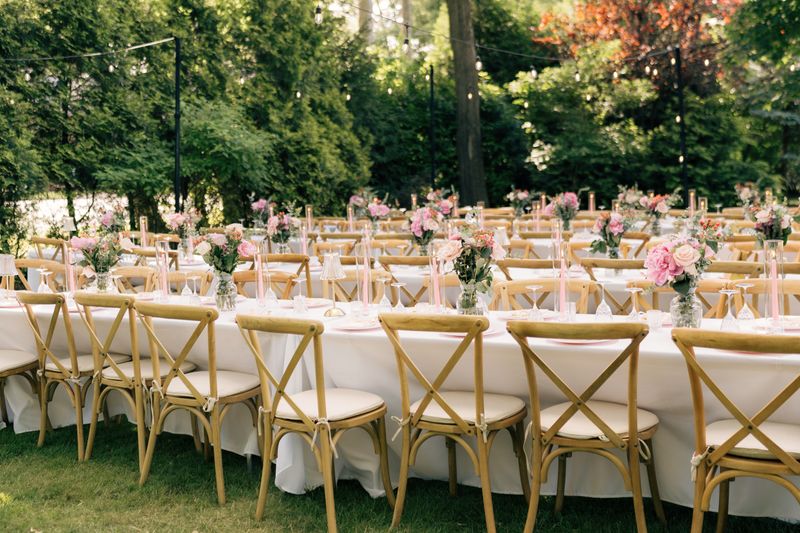
7. Set Up a Separate Dining Area
A dedicated dining space makes the reception easier to organize. Position tables where guests can comfortably eat while still remaining close to the main activity.
Long banquet tables can create a communal atmosphere, while round tables encourage conversation among smaller groups. Choose an arrangement that matches your guest count and available space.
8. Create a Relaxed Lounge Area
A lounge area gives guests somewhere to sit and talk away from the main dining tables. Outdoor sofas, cushioned chairs, benches, and small tables can create a comfortable social space.
If you do not own enough suitable furniture, rentals can provide a practical solution. Keep the arrangement open enough that guests can move easily between the lounge, dining, and entertainment areas.
9. Prepare for Heat, Rain, or Wind
Outdoor celebrations are naturally affected by weather. Shade structures, tents, umbrellas, fans, heaters, or portable shelters can help keep guests comfortable when conditions change.
Have a backup plan before the wedding day. Depending on the property, that could mean moving part of the celebration indoors, renting a tent, or identifying another covered area that can accommodate guests.
10. Keep Pathways Safe and Clear
Guests should be able to move safely between the ceremony, reception, restroom, parking area, and other parts of the property. Remove unnecessary obstacles and address uneven surfaces before the event.
Use lighting along darker pathways and consider temporary flooring or mats if certain areas are difficult to walk across.
Which Decorative Details Can Transform the Space?
Décor is one of the most enjoyable parts of designing a home wedding because it allows couples to express their personalities. The goal is not necessarily to decorate every corner. Instead, select details that create visual consistency and reinforce the mood you want for the day. Colors, textures, flowers, lighting, furniture, signage, and table settings can all work together to make the backyard feel cohesive.
A few carefully chosen features can often have more impact than dozens of unrelated decorations. These ideas can help you add personality while keeping the overall design attractive and manageable.
11. Choose a Coordinated Color Palette
Select two or three main colors and use them consistently throughout the celebration. The palette can appear in flowers, table linens, signs, cushions, napkins, and other decorative details.
Neutral tones can create an elegant look, while brighter colors may produce a more festive atmosphere. The existing colors in your landscaping and home can also inspire your choices.
12. Design Attractive Tablescapes
Dining tables provide plenty of opportunities to add personality. Simple centerpieces, coordinated napkins, candles, greenery, and attractive tableware can make even basic outdoor tables look intentional.
Avoid centerpieces that are so tall or elaborate that guests cannot see across the table. Practical design is especially important when people will be eating outdoors.
13. Add Personalized Wedding Signs
Signs can serve both decorative and practical purposes. Consider signs welcoming guests, identifying the bar or food area, directing people toward restrooms, or displaying the seating arrangement.
You can personalize them with the couple’s names, wedding date, favorite sayings, or a design that complements the rest of the décor.
14. Create a Photo-Worthy Backdrop
Set aside one location for photographs. A floral wall, decorated fence, greenery-covered arch, fabric installation, or simple arrangement of lights can provide a memorable background.
A dedicated photo area can also encourage guests to take pictures without constantly interrupting the ceremony or reception activities.
15. Use Natural Materials for a Warm Look
Wood, rattan, linen, greenery, stone, and other natural materials work particularly well in outdoor settings. They can create a relaxed appearance while complementing the surrounding landscape.
These materials are especially useful for rustic, garden-inspired, bohemian, or casual wedding themes, although they can also be incorporated into more refined designs.
How Can You Add Fun and Personal Touches?
The most memorable celebrations often include details that feel specific to the couple rather than decorations selected simply because they are popular. A home wedding provides plenty of opportunities to incorporate personal stories, hobbies, family traditions, and favorite activities. Entertainment does not have to involve elaborate production, either. Simple games, music, food stations, and interactive elements can keep guests engaged throughout the day.
Think about what your family and friends genuinely enjoy, then choose activities that encourage conversation and participation without making the event feel overly scheduled.
16. Set Up Lawn Games
If you have enough open space, lawn games can give guests something enjoyable to do between major parts of the celebration. Croquet, giant board games, ring toss, or similar activities can work well.
Choose games that are easy to understand and do not require complicated equipment. A small sign explaining the rules can help guests get involved.
17. Create a Personalized Music Area
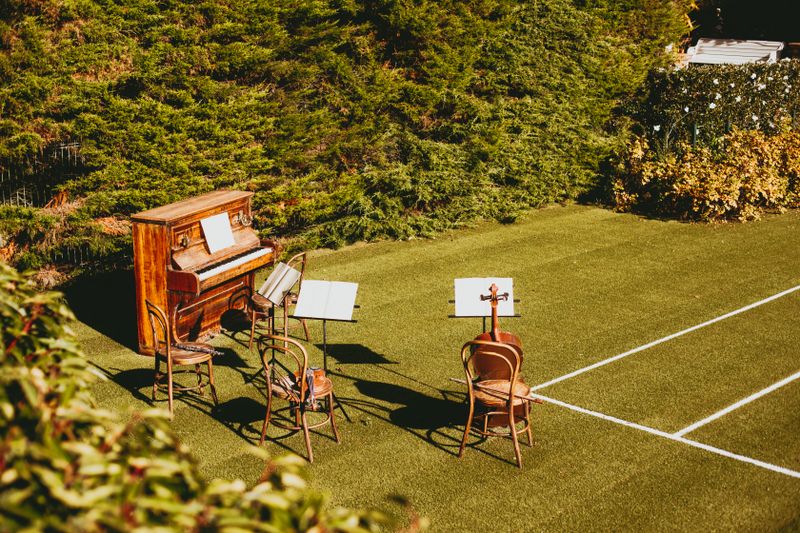
Music helps establish the mood throughout the wedding. You might hire a DJ or live musicians, or create carefully planned playlists if the event is smaller.
Place speakers thoughtfully so music can be heard clearly without becoming uncomfortable for guests. Keep volume levels appropriate for conversations, particularly during dinner.
18. Set Up a Dessert or Drink Station
A dedicated food or drink station can become both a practical feature and a decorative focal point. Consider a dessert table, lemonade station, coffee corner, mocktail bar, or selection of small treats.
Use labels to help guests understand their choices, especially when foods contain common allergens or when you are offering different dietary options.
19. Include a Guest Memory Station
Give guests a simple way to leave messages for the newlyweds. A guestbook, cards, photo display, or message jar can become a meaningful keepsake after the celebration.
You could also display photographs of the couple and their families around the space to create a more personal atmosphere.
20. Incorporate Family Traditions
A backyard wedding is an excellent opportunity to include meaningful family traditions. Use heirloom décor, family recipes, special songs, cultural customs, or other details that connect the celebration to the people who matter most.
These touches do not need to be elaborate. Even a small tradition can give the wedding a sense of history and emotional significance.
What Practical Details Should You Plan Before the Big Day?
Beautiful decorations can enhance a wedding, but practical planning determines whether the event runs smoothly. A backyard has different requirements from a conventional venue because many services and facilities may need to be arranged separately. Before finalizing your guest list, walk through the property and consider parking, electricity, water, restrooms, waste disposal, food preparation, weather protection, and cleanup.
Preparing your property for a wedding also means looking beyond what guests will see and addressing the behind-the-scenes details that keep the celebration comfortable and organized. A detailed plan can reduce last-minute problems and allow everyone to focus on enjoying the occasion.
21. Plan Guest Parking
Determine where guests will park before invitations are sent. If your property cannot accommodate everyone, identify nearby parking options and consider arranging transportation if necessary.
Clear signs can help guests find the correct area without disrupting the ceremony or reception.
22. Think About Restroom Access
The number of restrooms available at home may not be sufficient for a larger gathering. For bigger weddings, portable restroom rentals may be worth considering.
Place facilities somewhere convenient but discreet. Make sure pathways leading to them are well lit and easy to navigate.
23. Check Electrical Needs
Outdoor weddings often require more electricity than a typical day at home. Lighting, sound equipment, catering equipment, refrigeration, fans, and other services can place additional demand on electrical systems.
Discuss requirements with vendors ahead of time. Extension cords should be secured and kept away from areas where guests could trip.
24. Plan Waste and Cleanup
Food, drinks, decorations, and disposable items can create significant amounts of waste. Provide clearly labeled bins in convenient locations so guests know where to dispose of items.
Arrange cleanup assistance rather than expecting the wedding party to handle everything after the celebration. A dedicated cleanup plan can make the next morning much easier.
25. Have a Detailed Wedding-Day Timeline
A timeline helps coordinate vendors, family members, the wedding party, and other important participants. Include setup, guest arrival, ceremony, photographs, meals, speeches, entertainment, and cleanup.
Share the schedule with everyone who needs it. Assign specific responsibilities so that the couple does not have to answer every logistical question during the celebration.
How Can You Make the Celebration Feel Truly Special?
A backyard wedding does not need to imitate a traditional venue to feel complete. Its greatest advantage is the ability to create an environment that reflects the couple, their relationship, and the people they have invited to celebrate with them. Thoughtful planning can turn familiar surroundings into something that feels entirely new. Focus on the guest experience, choose décor that works with the property, and address practical details well before the wedding day.
Most importantly, leave room to enjoy the occasion instead of trying to make every detail flawless. A meaningful celebration comes from the atmosphere, memories, and people sharing the day together.
A backyard can provide the foundation for a beautiful wedding whether your style is elegant, rustic, modern, casual, or somewhere in between. From lighting and landscaping to seating, entertainment, and weather protection, each improvement can contribute to a more comfortable and memorable experience.
With careful preparation and a thoughtful approach to the available space, your home can become much more than a backdrop—it can become part of the story you will remember for years to come.